Why is the market at all-time highs if Hormuz is still closed? - FREE
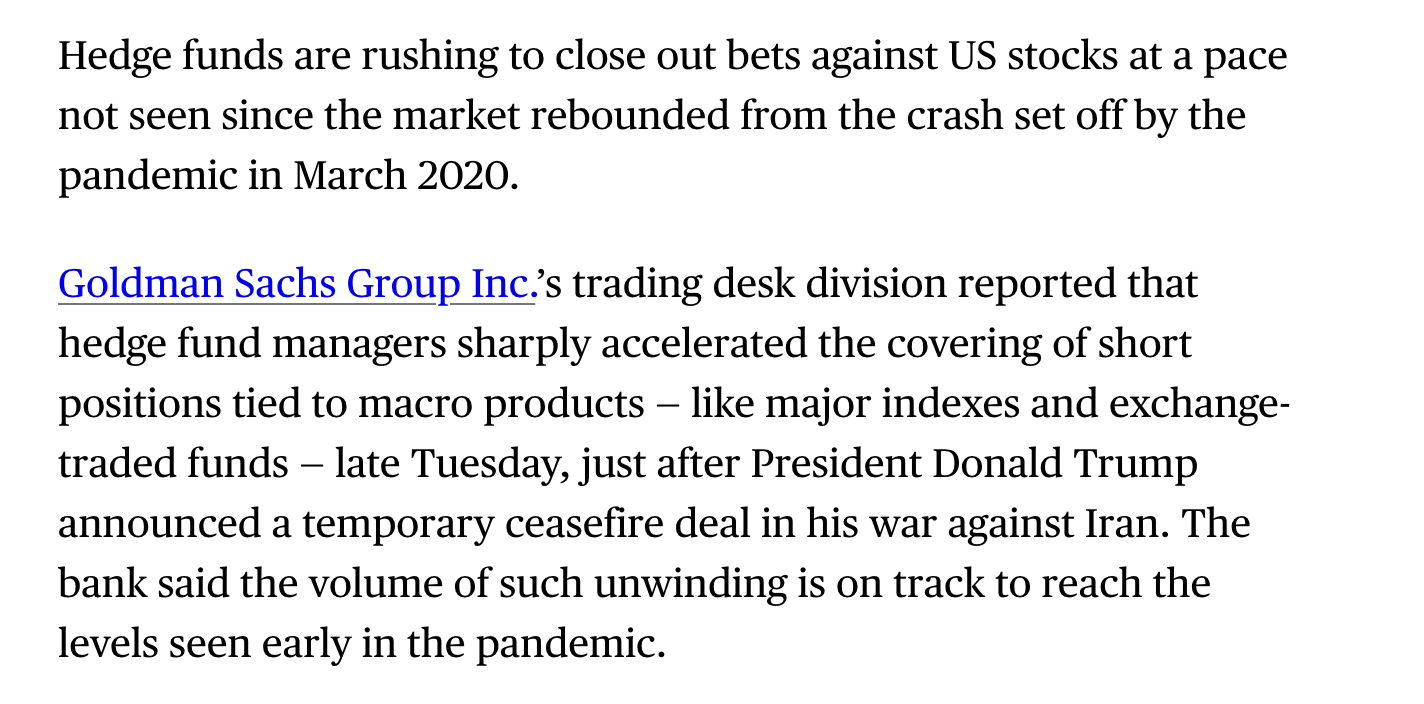
On April 7 at 5:32 p.m., Trump posted a ceasefire announcement on Truth Social.
The next morning, Wall Street responded with its best session in almost a year: the S&P 500 rose 2.5%, the Nasdaq gained 3%, and the Dow jumped 1,300 points.
The media called it a “relief rally.”
And yet the Strait of Hormuz was still closed. The ceasefire was collapsing in real time. The market was celebrating something that had not actually happened.
To understand why, we need to go back a few weeks.
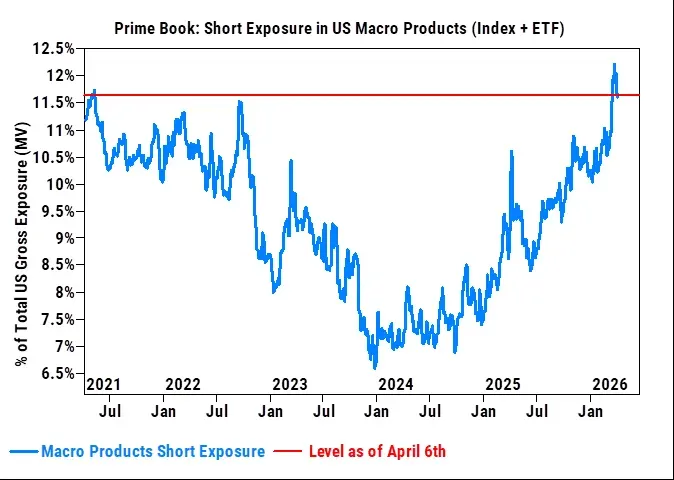
After the Strait was closed, Goldman Sachs Prime Brokerage data showed that in Q1 hedge funds were selling at the fastest pace in 13 years, faster than in April 2020.
Gross leverage was above 300%, while short exposure on SPY and QQQ was at its highest level since the pandemic.
Rory Johnston, one of the most widely followed energy analysts, was forecasting a deficit of 15 million barrels per day and Brent between $250 and $300.
Even the word “recession” seemed too optimistic to him: he was talking about a “depressionary” scenario. The entire financial ecosystem was positioned for the apocalypse.
And that was exactly the problem.
When everyone has already sold, there is no one left to sell.
Three factors drove the rally:
1. Any news that was not the end of the world was enough to trigger a disorderly retreat by the bears. It did not matter whether the news was true. What mattered was that short sellers were getting margin calls and had to cover.
And that is exactly what happened: the short squeeze injected immediate, mechanical buying pressure, independent of any fundamental assessment.
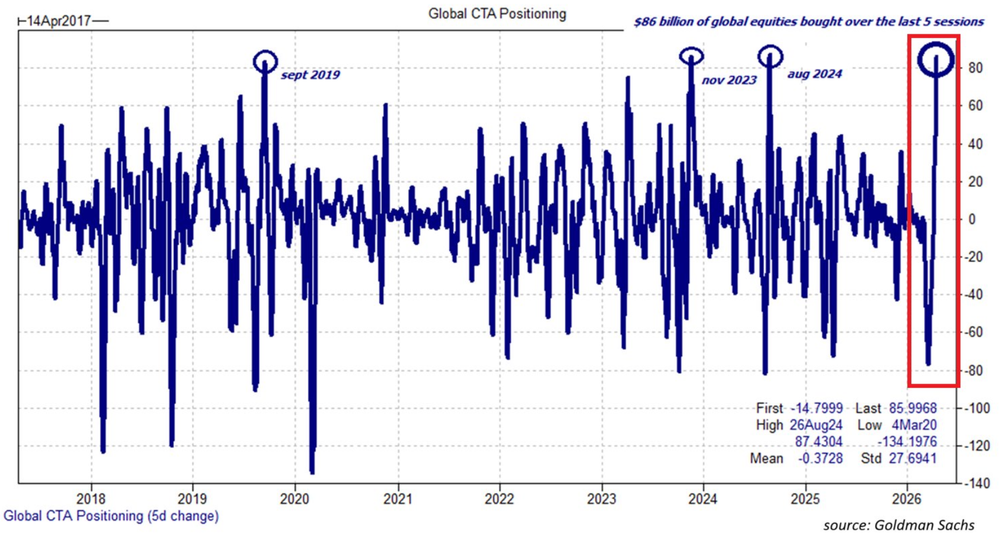
- On top of this came the CTAs: systematic funds that follow trends and ignore the news.
Goldman estimated that CTAs were short by $30 billion before the rally. When the S&P broke above key technical thresholds, the algorithms automatically reversed position: $86 billion of buying in just five sessions, more than double the initial estimates.
One of the five fastest buying waves in financial history.
‼️CTAs saw one of the largest global equity buying sprees in history:
— Global Markets Investor (@GlobalMktObserv) April 17, 2026
Over the last 5 trading sessions, CTAs purchased +$86 billion in global equities, near the largest ever, according to Goldman Sachs.
CTAs, or Commodity Trading Advisors, are large trend-following funds that… pic.twitter.com/cXFIGrjQQi
- The third mechanism is the most technical.
Before the rally, the market was in a negative gamma regime: options dealers, in order to remain delta-neutral, were forced to buy stocks as prices rose.
A mechanism that normally stabilizes the market had turned into an amplifier.
Every point higher generated new forced buying.
So the answer to the paradox is this: the market rose not because the Strait had reopened, but because positioning had become too extreme.
The ceasefire did not change the fundamentals. It changed the signal for those who were short.
Hedge funds started covering.
CTAs crossed technical thresholds and bought automatically.
Dealers, in negative gamma, amplified every tick higher.
Three different mechanisms, same effect: forced demand.
In this context, “news” serves as a post-hoc narrative to rationalize moves that were born in the engine room of systematic trading.
The market did not price in peace. It priced in the end of extreme positioning. Those are two very different things.
As of today, the Strait is still closed. Brent is at $118. The Fed is in a difficult position. But the market is at all-time highs.
Le informazioni pubblicate da Daniele Cristaldi hanno esclusivamente scopo informativo e divulgativo. Nulla di quanto riportato costituisce consulenza finanziaria, sollecitazione all'investimento, né raccomandazione di acquisto o vendita di strumenti finanziari ai sensi del D.Lgs. 58/1998 (TUF) e della normativa MiFID II. Le analisi e le opinioni espresse riflettono unicamente il punto di vista personale dell'autore e non devono essere interpretate come garanzia di risultati futuri. Qualsiasi decisione di investimento è adottata dall'utente sotto la propria esclusiva responsabilità.